Craft & culture
Multani blue pottery: the cobalt-blue craft of Multan, and how to buy it
Cobalt and turquoise on white, painted freehand by the same craftsmen who tile the shrines of Multan. Here is where blue pottery comes from, how it is made, and how to buy a good piece.
Some links in this guide are commission links: if you buy, we may earn a small fee at no cost to you. How we earn.
In this guide
Approach the shrine of Shah Rukn-e-Alam in Multan and the first thing you see is blue: the walls are covered in glazed tiles of cobalt, turquoise and white. The same craft, called kashigari, is what produces Multan’s blue pottery, the vases, plates, lamps and tiles that are sold in bazaars across Pakistan and shipped around the world.
Here is where it comes from, how it is made, and how to choose a good piece.
What is Multani blue pottery?
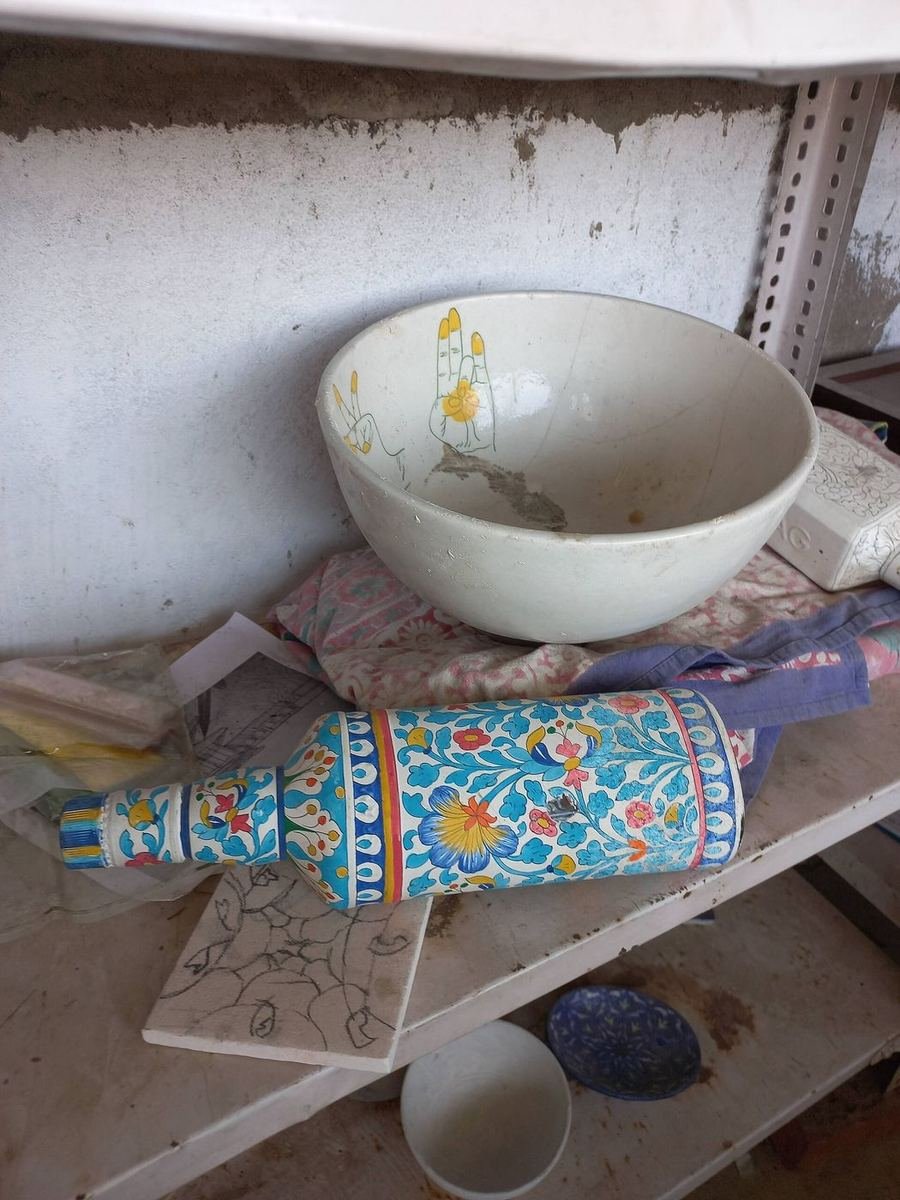
It is hand-painted glazed ceramics from Multan in southern Punjab. The classic look is a blue ground with white flowers, or white with blue patterns, painted in cobalt blue with touches of turquoise. Flowers, leaves, vines and stars are the main motifs, and every piece is painted freehand, so no two flowers are quite alike.
The potters are called kashigars. The finest, thinnest-walled work is known as kagazi, a word that means “paper-like”.
A very old craft
Glazed tilework has been made in this region for centuries. In the nineteenth century the archaeologist Alexander Cunningham reported glazed tiles from the old fort mound of Multan, the Qasim Bagh, which he dated to around 900 AD. The tombs and shrines of Multan and Uch Sharif, including Shah Yusuf Gardezi (dated to 1153) and Shah Rukn-e-Alam, are the classic showcases of the craft, and tile work like it appears at shrines in Sindh.
The decoration shows Persian and Central Asian influence: the vines and blossoms, the cobalt blue and the stars. Over time Multani potters adapted it, and kept to the same blue-and-white palette. Today pieces of Multani pottery are displayed in collections around the world, including the British Museum, according to one account.
How blue pottery is made
The details differ between workshops, but in outline:
- Shaping. Clay is shaped on a wheel or in a mould, then dried.
- First firing. The dry piece is fired so that it is hard enough to paint.
- Painting. The craftsman paints the design freehand with a brush. The special blue comes from cobalt oxide, and copper oxide gives the greener turquoise.
- Glazing and second firing. A clear glaze is applied, and the piece is fired again at a higher heat, which fuses the glaze and brings out the colour.
Before firing, cobalt looks dull and grey-black. It only turns that deep blue after the kiln, which is part of the skill.
Not the same as Jaipur blue pottery
If you search for blue pottery online you will also see Jaipur blue pottery from India. It looks similar but is a separate tradition, and the two are not interchangeable. The Pakistani craft is tied to Multan and its tile work.
How to choose a good piece
- Look for brush strokes. Hand painting shows small differences from one flower to the next. Identical, flawless transfers can be decals.
- Tap it lightly. A clear ring means no hidden cracks, and a dull sound can mean a crack.
- Check the glaze. It should be smooth and even. A few tiny pinholes or a fine web of cracks (crazing) are common in handmade ceramics and mostly cosmetic.
- Feel the weight. Thin, light, even walls are a sign of skill.
- Look at the base. Handmade pieces are often left unglazed underneath, where they sat in the kiln.
Is it food safe?
Be careful here. Many blue pottery pieces are made to be decorative, and some glazes, especially on decorative ceramics, can contain lead or other metals that should not touch food or drink. Unless the seller states that a piece is food-safe and lead-free, use it for flowers, display and dry objects, not for serving. If you want to eat or drink from a piece, ask the seller in writing.
Caring for it
- Hand wash with warm water and a soft cloth.
- Avoid sudden temperature changes, since they can crack the glaze.
- For shipping, wrap each piece separately and leave space around it. Blue pottery is fragile.
What to pair it with
Multan has two other crafts worth knowing about. The painted camel-skin lamps are made in the same city and glow warmly against blue tiles, and the city’s famous winter sweet is the sohan halwa. For a Multan gift hamper, a vase and a tin of halwa make a pair that looks the part. You can find more ideas in our guide to gifts from Pakistan, and if you like Multan’s summer fruit, read our mango guide.
Camel-skin lamp
Painted lamp made from camel hide
Translucent hide painted in gold, lit from within.
Sohan halwaسوہن حلوہ
Dense sweet made with ghee and nuts
Multan’s dense, nutty sweet, sold in round tins.
Questions people ask
What is Multani blue pottery?
Hand-painted glazed ceramics and tiles from Multan, Pakistan, usually in cobalt blue and turquoise with white, decorated with flowers and vines. The craft is called kashigari.
How old is the craft?
Glazed tiles were being made in Multan about a thousand years ago, according to the archaeologist Alexander Cunningham’s dating, and the shrines of the city are the best-known showcase.
Is Multani blue pottery food safe?
Not necessarily. Many pieces are decorative, and some glazes can contain lead. Only use a piece for food or drink if the seller states that it is food-safe and lead-free.
What is the difference between Multani and Jaipur blue pottery?
They look alike but are separate traditions from different countries and with different methods. Multani pottery comes from Multan, Pakistan, and is tied to its tile and shrine work.
How do I care for blue pottery?
Hand wash gently, avoid sudden temperature changes, and wrap each piece well when shipping.