Craft & culture
Rilli (ralli): the patchwork quilts of Sindh, and how to choose one
Hundreds of scraps of cloth, cut by hand, stitched in groups, and passed down as heirlooms. Here is how a rilli is made and how to choose a good one.
Some links in this guide are commission links: if you buy, we may earn a small fee at no cost to you. How we earn.
In this guide
In Sindh, a quilt is more than something to keep you warm. Look inside a village house and you will find a stack of them: patchwork covers in red, indigo, yellow and green, laid over beds, spread on the floor for guests, and folded away as part of a daughter’s dowry. These are rillis, and each one is built from hundreds or thousands of small pieces of cloth.
You will also see the name spelled ralli or rali. Here is what they are and how to choose one.
What is a rilli?
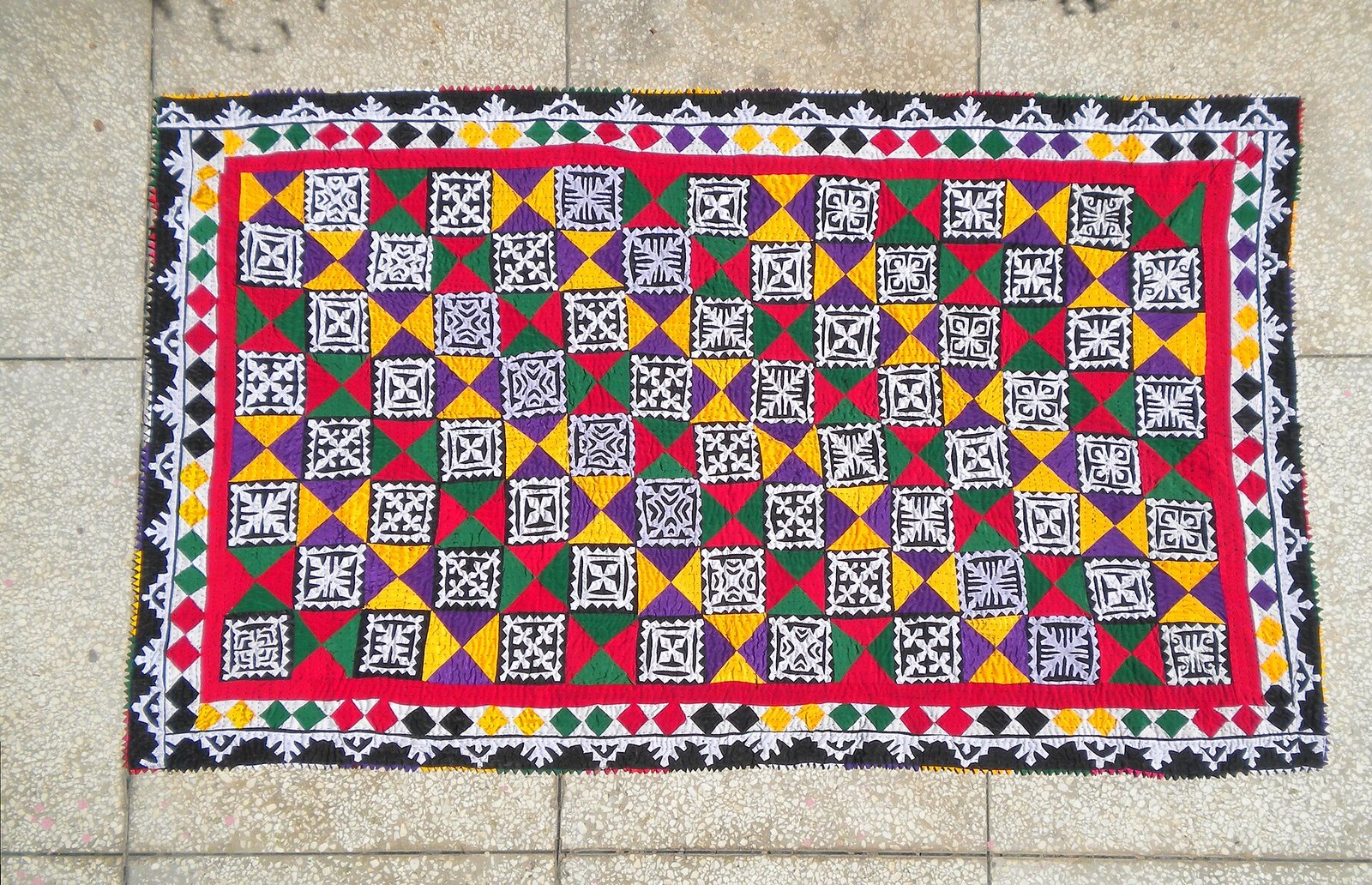
A rilli is a quilt made by women in Sindh and the neighbouring desert and river regions, a tradition that stretches north to southern Punjab and Cholistan and east into Rajasthan and Gujarat in India. Rillis show several techniques, including patchwork (small pieces sewn together), appliqué (cut shapes stitched on top of a base) and embroidery, and a single quilt can combine them.
Underneath it is a very practical object. Old, worn cloth is saved and reused, so a rilli is also one of the oldest forms of upcycling you can still buy.
How a rilli is made
The traditional way of making one follows a clear logic:
- Collecting cloth. Old clothes, scraps and offcuts are saved, often dyed, and cut into small pieces.
- Making the top. The pieces are arranged into a pattern and sewn, usually by one woman. Patchwork rillis often use repeating triangles and squares, arranged on the diagonal.
- Layering. The decorated top is laid over a backing, and in some quilts that backing is a piece of an old ajrak or a dark cloth, with padding in between.
- Quilting. The layers are stitched together with rows of small running stitches, often by a group of three or four women sitting around the quilt. For a wedding the quilting can become a celebration, with singing and stories.
The patterns are rarely drawn on paper. Makers often carry them in memory and learn them from their mothers and other women of the family, which is why designs vary from village to village.
What the patterns look like
You may notice a few styles:
- Patchwork rillis in repeating blocks. The International Quilt Museum holds one from Sindh with a repeating “floor tile” design, called farsh, in which every block is made of 36 triangles and the middle of the quilt contains 2,160 pieces.
- Appliqué rillis, with cut-out shapes in contrasting colours stitched on a plain ground.
- Embroidered rillis, where stitching makes the pattern on solid cloth.
A classic colour scheme is satrangi, “seven colours”, based on the old natural palette: white, black, red, yellow, dark green, blue and purple. Some writers have noted that the geometric motifs resemble the carved stone patterns on old desert tombs in Sindh and Balochistan.
Why they matter
In many families a rilli is a measure of wealth and of care: a bride may bring several to her new home, and in some areas a family’s standing is described by how many it owns. After the floods of 2010, women in affected parts of Sindh sold rillis to support their families, according to one craft-teaching guide. So when you buy one directly from makers or a trusted seller, you are supporting a working craft.
How to choose a good rilli
- Look for hand stitching. Rows of small, slightly uneven running stitches across the whole quilt are a sign of hand work. Machine quilting is perfectly regular.
- Check the cloth and the filling. Cotton is traditional and breathable. Ask what the filling is and how heavy the quilt is.
- Turn it over. Many are reversible, with a second design on the back.
- Ask for the size in centimetres. Traditional rillis can be smaller than Western bed sizes.
- Expect small irregularities. Slight differences in shape and colour are a sign of a human maker, not a flaw.
- Ask where it was made. Sellers who name the region and the makers are usually the most reliable.
How to use one
A rilli is wonderfully flexible. In winter it is a bed cover, and in summer a lighter throw. It also works as a sofa throw, a picnic or floor cloth, a wall hanging or a covering over a charpai, the traditional rope bed. Pair one with a block-printed ajrak and you have a very Sindhi room.
Washing and care
- Wash gently by hand or on a cold delicate cycle, and expect natural dyes to run a little at first.
- Dry flat or on a line in the shade.
- Store it folded with space to breathe, away from damp. Fold it differently now and then so creases do not set.
Another Sindhi craft to know
Rillis come from the same corner of Sindh as the lacquered wooden crafts of Hala, which are turned on a lathe and coloured by hand. Both make good gifts, as do the pieces in our guide to gifts from Pakistan.
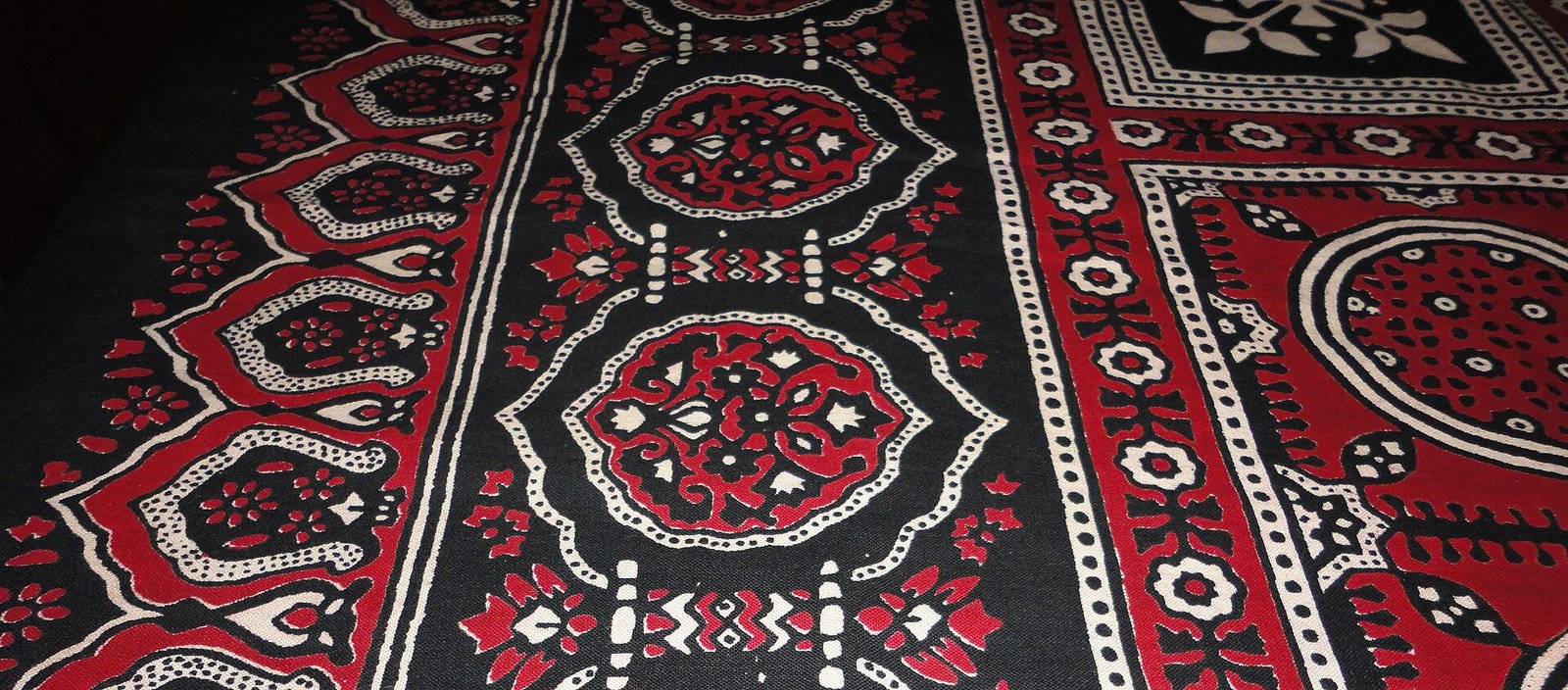 Photo: Ahub1988The real thing
Ajrakاجرک
Block-printed cotton shawl
Indigo and madder, stamped by hand on both sides of the cloth.
Hala lacquerwareجنڈی
Lacquered, lathe-turned wood
Wood turned on a lathe and coloured by friction, in bands of red, yellow and green.
Questions people ask
What is a rilli?
A hand-made patchwork, appliqué or embroidered quilt from Sindh, made by women from recycled cloth. The word is also spelled ralli.
How is a rilli made?
Small pieces of cloth are cut and sewn into a top, which is layered over a backing and padding and then stitched together with rows of running stitches, often by a group of women.
How can I tell a hand-made rilli from a machine-made one?
Look for slightly uneven running stitches across the quilt and small irregularities in the pieces. Machine quilting is perfectly regular.
Can I wash a rilli?
Yes, gently by hand or on a cold delicate cycle, and dry it flat or on a line in the shade. Natural dyes may run a little at first.
What does satrangi mean?
It means “seven colours” and refers to a traditional rilli palette of white, black, red, yellow, dark green, blue and purple.