Craft & culture
Rilli (ralli): the patchwork quilts of Sindh, and how to choose one
Hundreds of scraps of cloth, cut by hand, stitched in groups, and passed down as heirlooms. Here is how a rilli is made and how to choose a good one.
Our affiliate links are yet to be finalised.
Home / Bazaar / Sindh / Rilli quilt
Hand-stitched patchwork quilt
Hundreds of cloth scraps, cut into triangles and stitched into one heirloom.
$80–250
Find hand-stitched rillis on Etsy ↗If you buy through this link we may earn a small commission. It never changes your price.
The story
A rilli (also written ralli) is a patchwork quilt made by women in Sindh and the surrounding desert regions. It is built from hundreds of small pieces of dyed cotton, arranged into bold geometric blocks and held together by thousands of tiny running stitches.
Rillis are rarely made alone. Mothers, daughters and neighbours stitch together, and a finished quilt often becomes part of a bride’s dowry.
In pictures
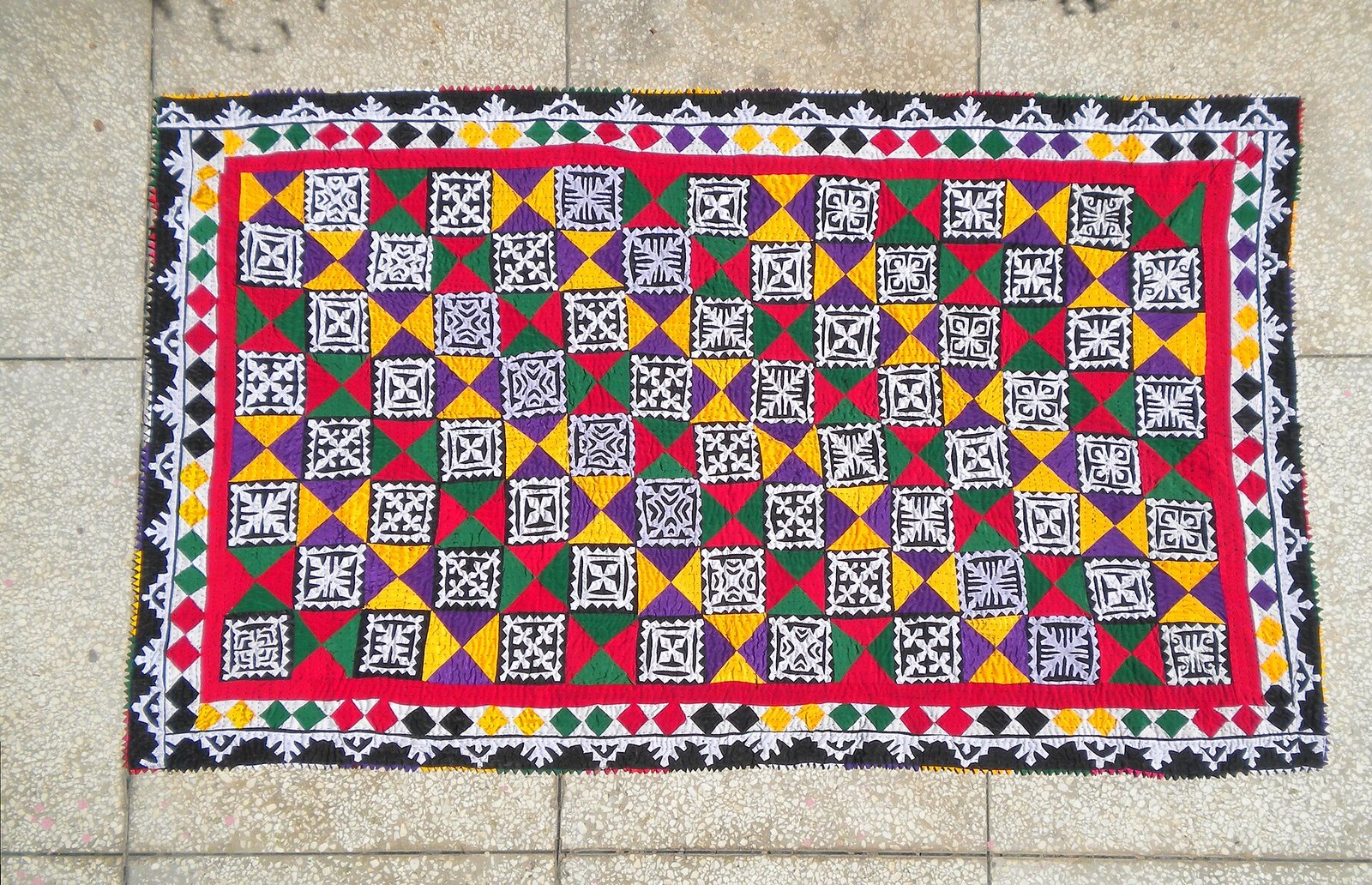
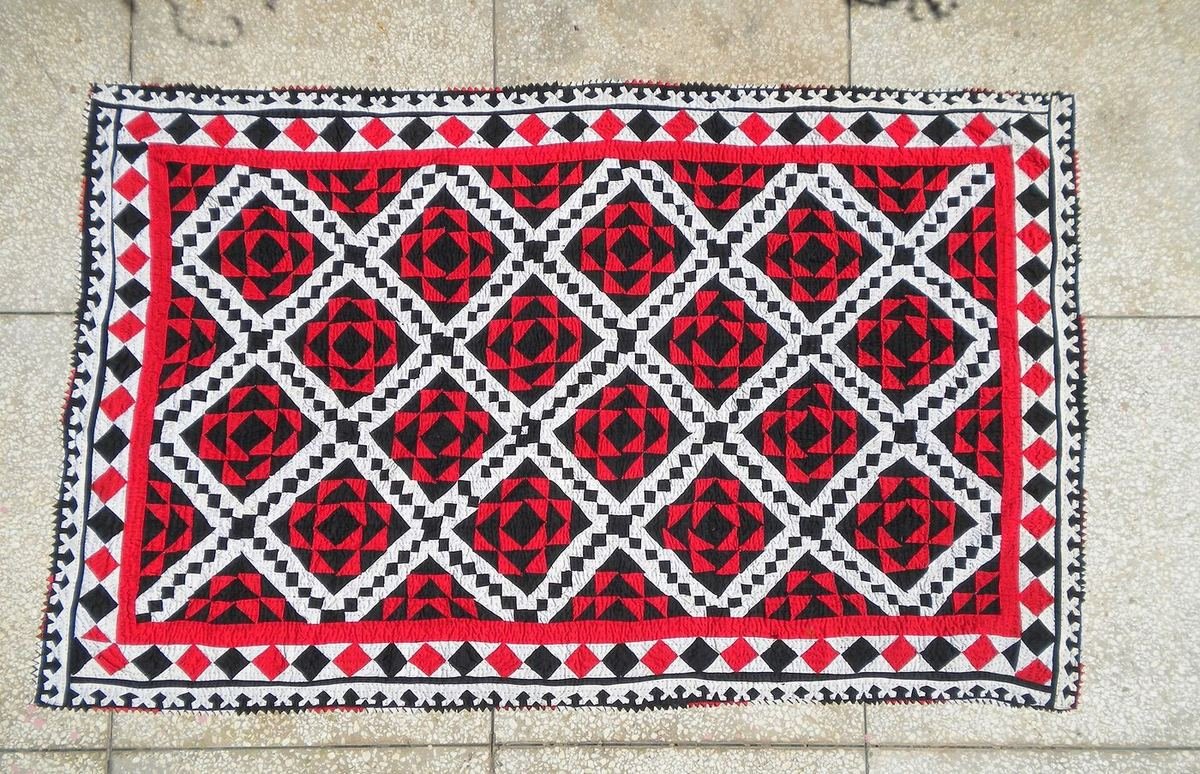
History
Patchwork quilting has a long history across the Indus valley and the Thar desert, where nothing useful is thrown away. Old clothes and cloth scraps are dyed, cut and given a second life.
Patterns vary by community. Some rillis use large appliquéd shapes, others fine cut-work, and the colour palettes shift from village to village.
How it’s made
Old cotton is washed and dyed in strong colours: red, indigo, yellow, green, black and white.
Pieces are cut into squares, triangles and cut-work motifs, often folded first like paper snowflakes.
Shapes are stitched into blocks, or appliquéd onto a base cloth, to make the top layer.
The top, a filling of old cloth or cotton, and a backing are joined with rows of small running stitches.
Edges are finished with a border and sometimes tassels or mirror work.
Kinds
Squares and triangles pieced together into a grid.
Cut shapes stitched onto a plain base.
Folded, cut and appliquéd motifs that look like lace.
In Pakistan
A rilli is a bed cover in winter, a floor seat when guests arrive, a wall hanging for special days, and a blanket thrown over a charpai or a motorbike seat. Older rillis are kept and passed down.
Buy it well
| Genuine | Likely a copy |
|---|---|
| Rows of small uneven hand stitches | Perfectly straight machine stitching |
| Colours vary slightly between pieces | Printed patchwork pattern on one cloth |
| Heavy, layered and soft | Thin and light |
Where to buy
We may earn a small commission. Your price is the same.
Find hand-stitched rillis on Etsy ↗Typical price: $80–250, before shipping. Read the “Buy it well” checks above before you order, and ask the seller for photos of the exact piece.
Questions
They are related traditions but different. Kantha comes from Bengal and is mostly running-stitch embroidery. Rilli is built from pieced and appliquéd cloth.
A cold, gentle cycle is usually fine for newer quilts. Hand wash older or antique pieces.
Both. Vintage rillis cost more and have softer, faded colours.
Keep exploring
Hand-painted metal kettle
The painting on Pakistan’s trucks, shrunk to fit a kitchen shelf.
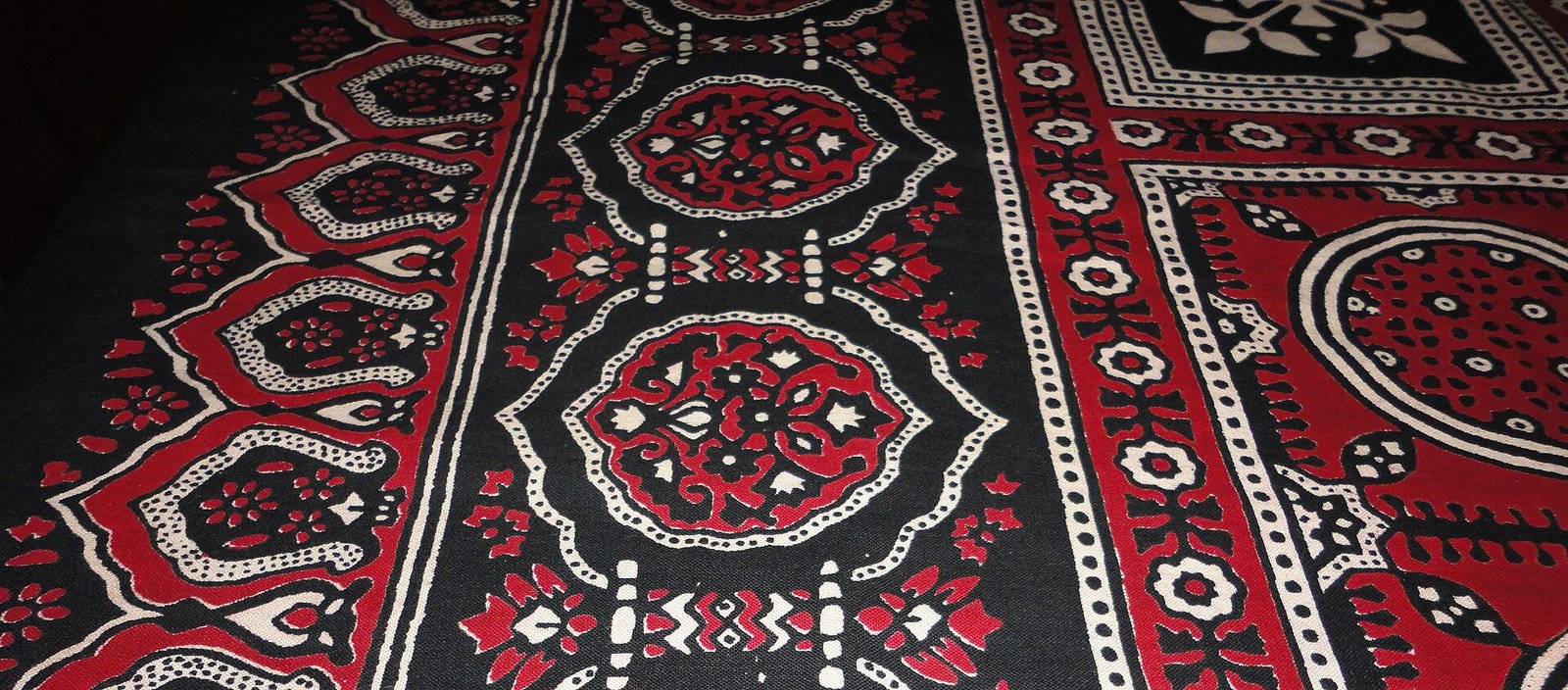 Photo: Ahub1988The real thing
Block-printed cotton shawl
Indigo and madder, stamped by hand on both sides of the cloth.
Lacquered, lathe-turned wood
Wood turned on a lathe and coloured by friction, in bands of red, yellow and green.
Pakistani spice mixes, one dish per box
Biryani, nihari and karahi from a Karachi box, with the recipe printed on the back.
From the blog
Craft & culture
Hundreds of scraps of cloth, cut by hand, stitched in groups, and passed down as heirlooms. Here is how a rilli is made and how to choose a good one.
Craft & culture
Deep indigo, madder red, and a pattern printed on both sides. Here is how ajrak is made, how Sindhis wear it, and how to tell a hand-blocked piece from a screen print.
Share
Painting your card…
Stickers have a transparent background. Save one, then add it to an Instagram story, or turn it into a WhatsApp sticker with any sticker-maker app. If Save does nothing, press and hold (or right-click) the image to save it.